◆◆◆
Monument Circle is built around a work of towering traditional public art that shares with us historical and moral lessons of sacrifice, peace, war, freedom, and civic values. But the Circle is—and has long been—even more than a monument of remembrance. It’s a living place where memories are made, where all kinds of people gather every day to protest, to mourn, to celebrate, or just hang out.
Always a magnetic draw for visitors from near and far, Monument Circle also offers a perfect place for a different but complementary sort of public art—an active one that is more social and human scale than about passively experiencing physical objects. The main ingredient for this kind of socially focused art is the presence of people.
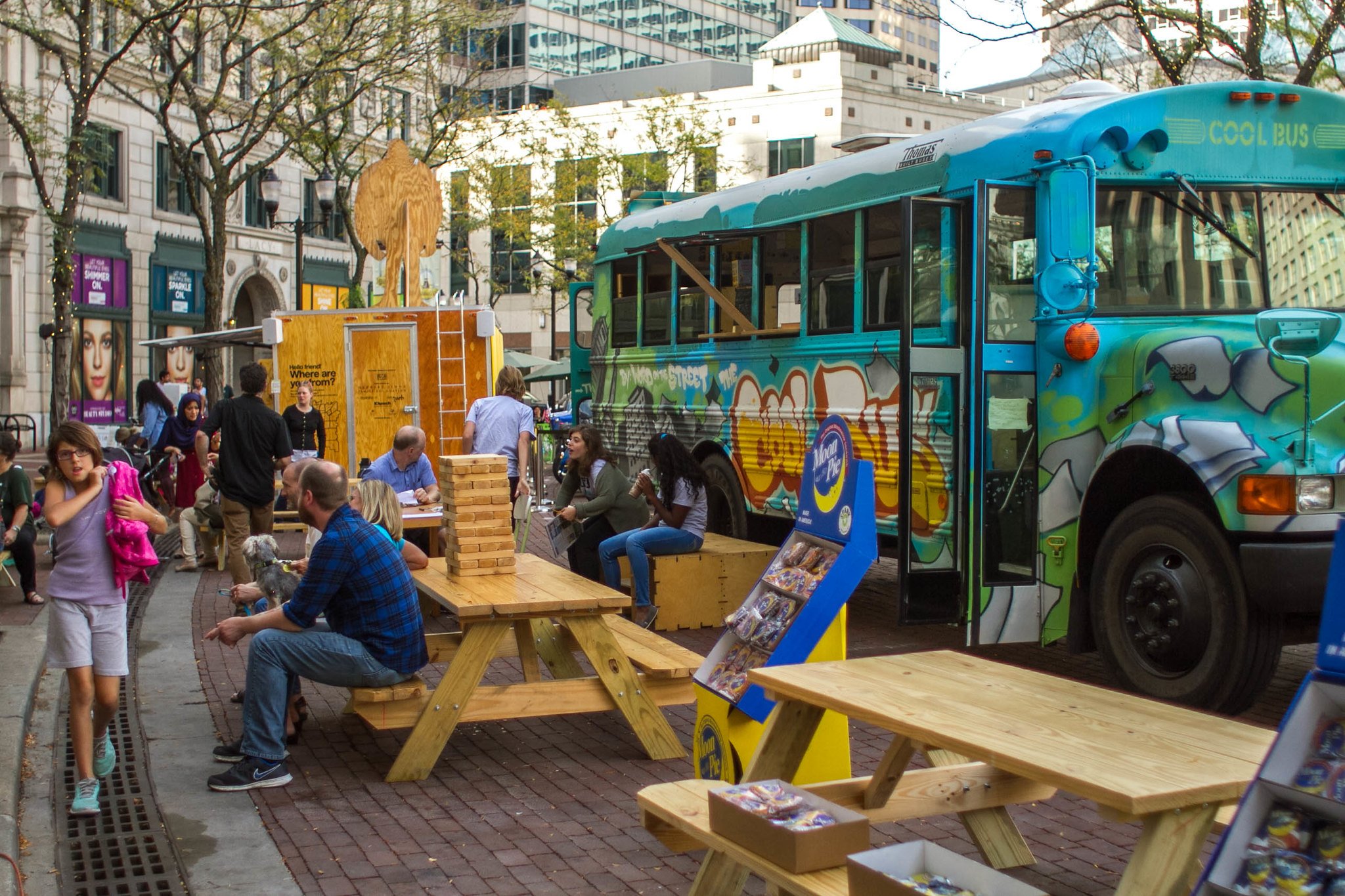
Above
SPARK on the Circle (2015).
Since 2015, I’ve had the honor of leading our team of artists at Big Car Collaborative in working with many partners and creative collaborators to foster public art experiences through the SPARK Monument Circle program. Over the last decade, our city’s civic leaders have demonstrated a commitment to the work we do utilizing tools of culture and creativity to build community and social cohesion. SPARK is about helping connect people as a way to boost the quality of our everyday lives.
In our first summer at SPARK back in 2015 we temporarily transformed one section of the Circle, limiting the driving lanes and putting out tables and chairs where cars had previously parked. We fostered comfortable spots for folks to converse and engage with artists and each other. We paid attention to what’s there and slowed things down to help everyone do the same.
The result then—and each year since we started back up in 2022—has been that people really enjoyed the Circle as a place to play, find peace, celebrate our city, and participate in art and creativity. And they liked to do this daily in small ways, not just at big events.
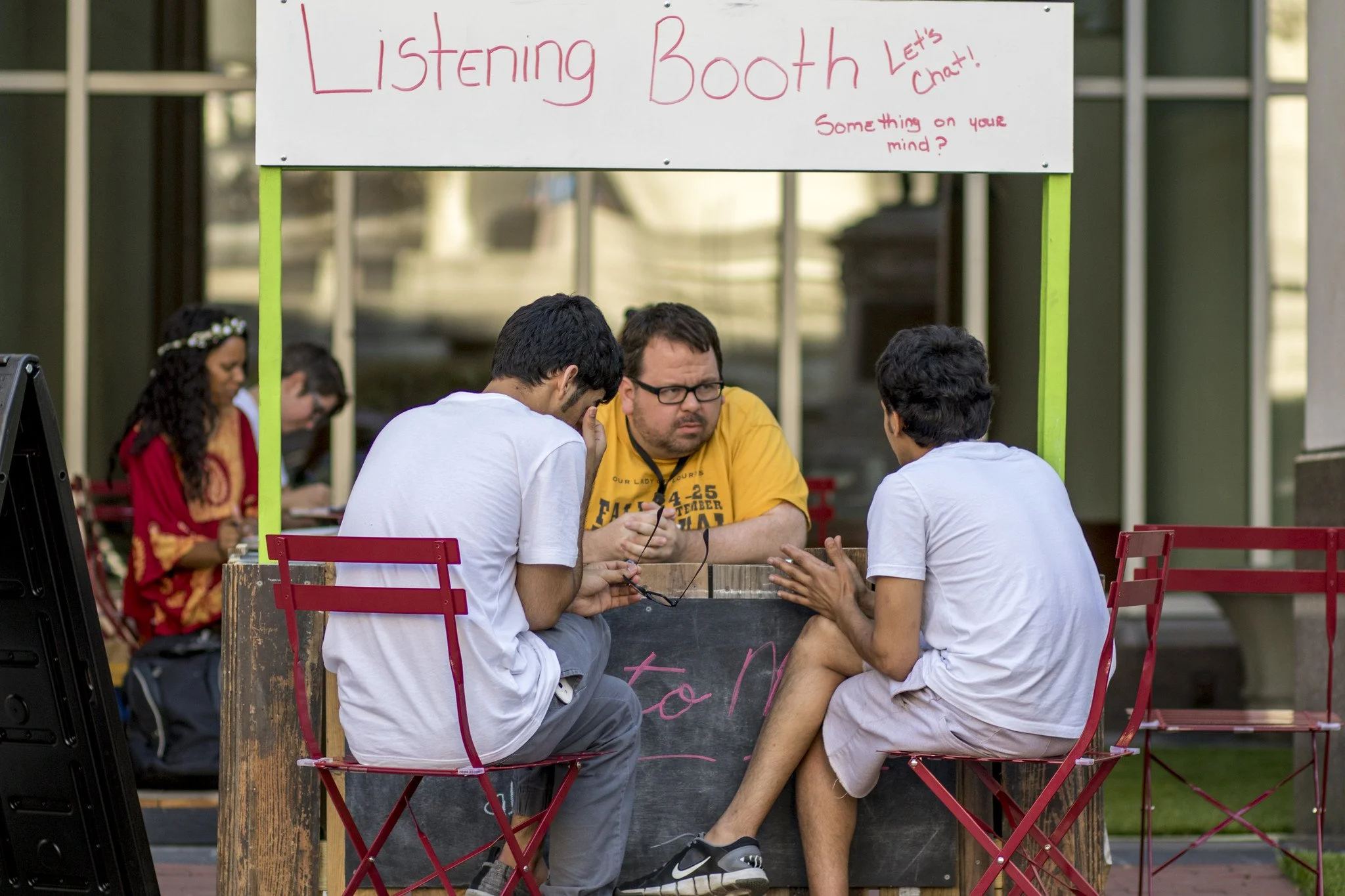
Above
The Listening Booth at SPARK on the Circle (2015).
In 2015, we offered all sorts of small opportunities for people to engage with artists. With the Listening Booth, we sat and heard what folks wanted to share, just listened. With Forensic Friends, artists sat with visitors and made portrait sketches, not of criminals but of regular people described by those who love them.
We also took an artist’s approach to wanting to share our work. We decided to just leave the chess and checkers out, as well as the ping pong paddles and balls. We didn’t want a check out system to get in the way of people being able to play.
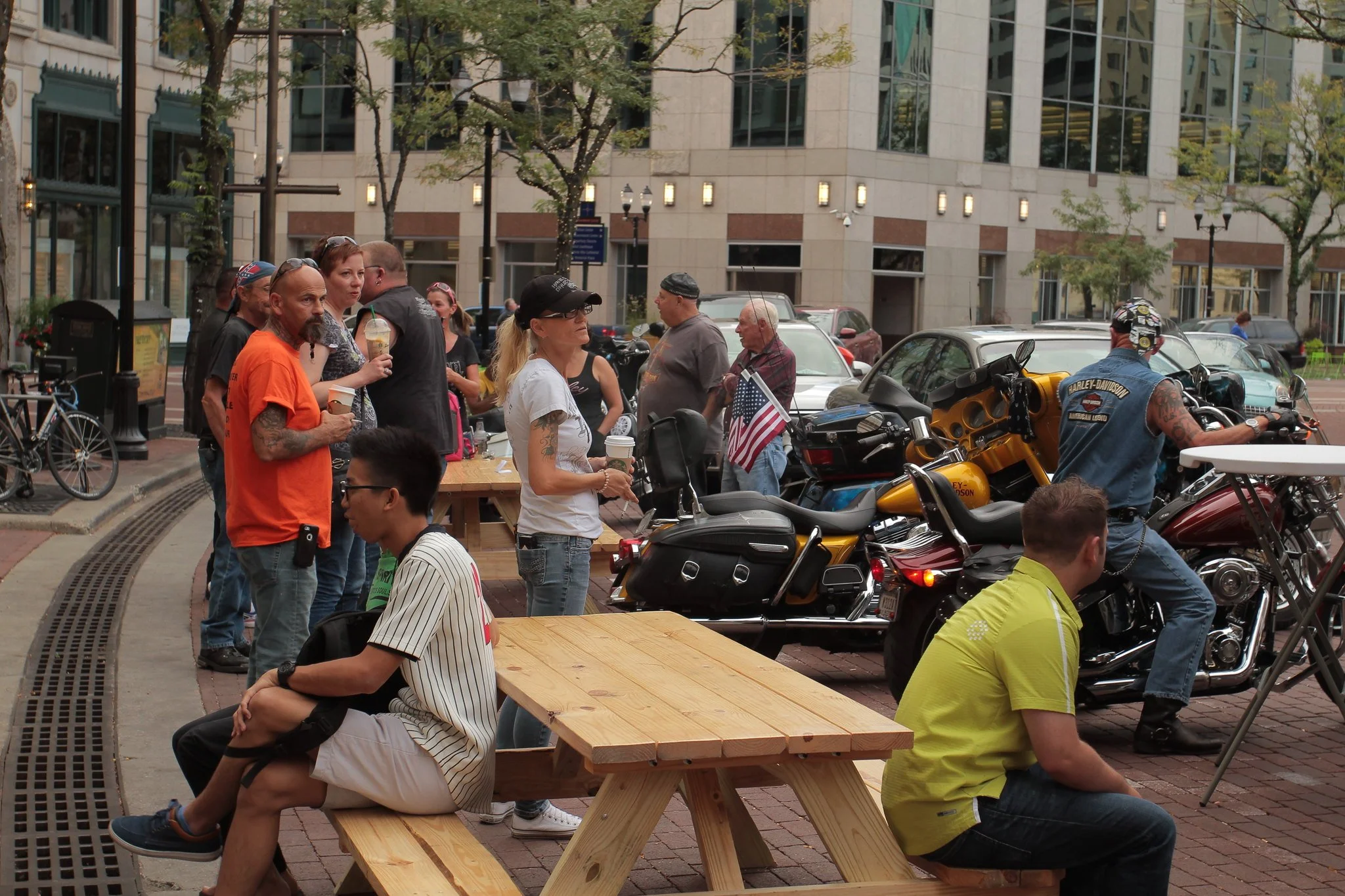
Above
On the south side of the circle, a closed driving lane is filled with picnic tables (2015).
And we learned that when we took something away—or even moved that thing to a new location—we needed to give something back. The group of motorcyclists that gathered at the Circle was getting frustrated as we first closed off a driving lane. But, as soon as we added picnic tables there in the lane, they just parked their bikes a little further out and went and sat at the tables and at least accepted what we were doing.
It may not be easy to see at first, but SPARK is a work of public art with creative processes like ones used by the Monument’s creators. These steps are inspiration and exploration, planning and sketching, choosing materials and making, refinement, and maintenance.
Traditional artists start with inspiration and ideas drawn from their observations of the world, emotions, questions, research, and the influence of other artists. We do much the same with our social art practice. But our exploration in this case is informed and inspired by the place and the people there—as well as how we might help foster positive interpersonal experiences.
Above
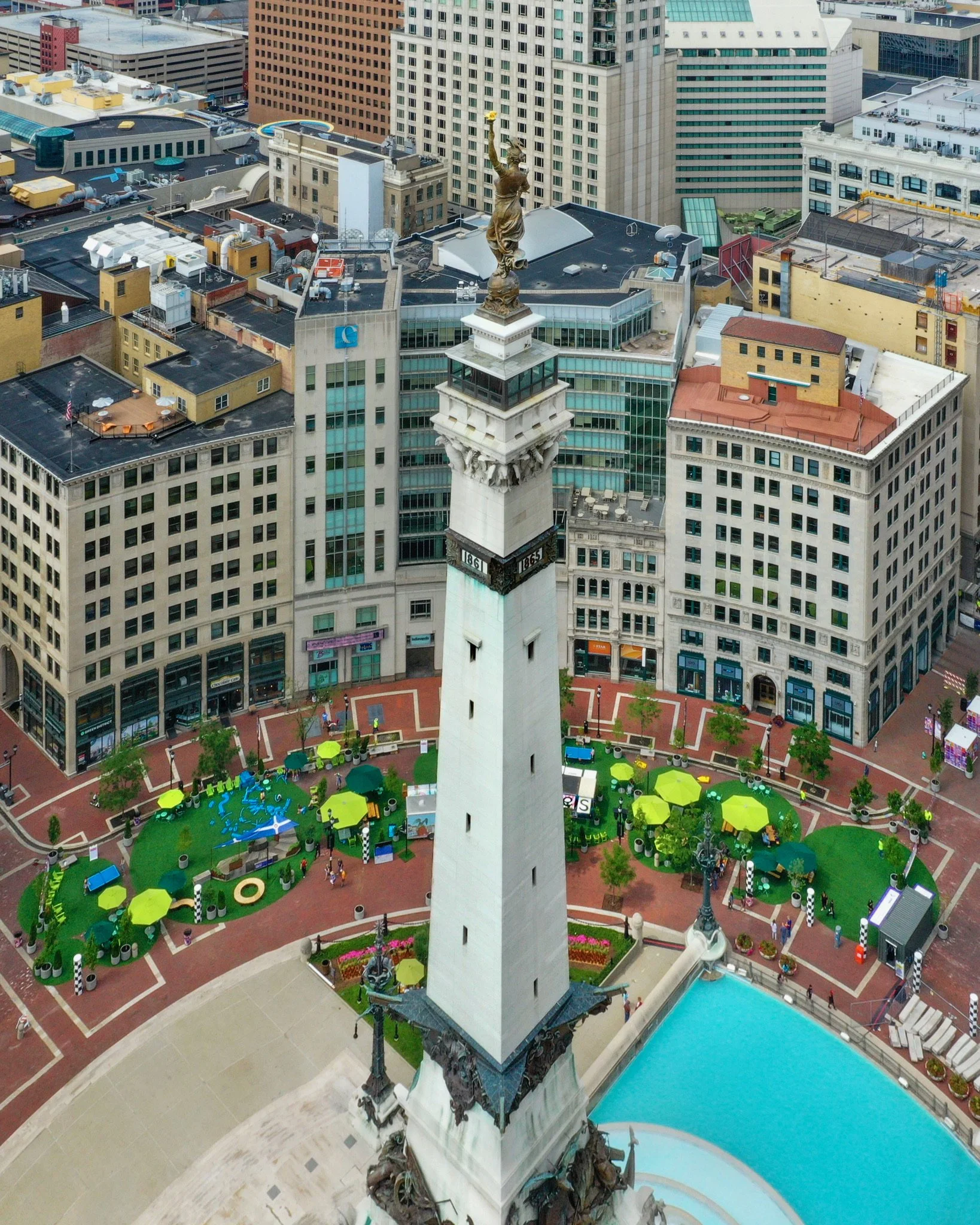
SPARK on the Circle, designed by Merritt Chase; photo by Hadley Fruits.
Artists then plan out their ideas. A painter might make sketches or studies. A sculptor might build a model. In our work, this part of the process involves testing activities and ideas in the actual space, observing how things go, making changes, moving stuff around, adding and subtracting. For example, in 2022, we started small on the interior of the Circle, then worked with Downtown Indy Alliance and the City to close an entire quadrant to traffic for a weekend festival. Its success led us all to work with landscape architects at Merritt Chase to develop the longer-term setup with turf, big umbrellas, and planters we’ve used in the years since.
Above
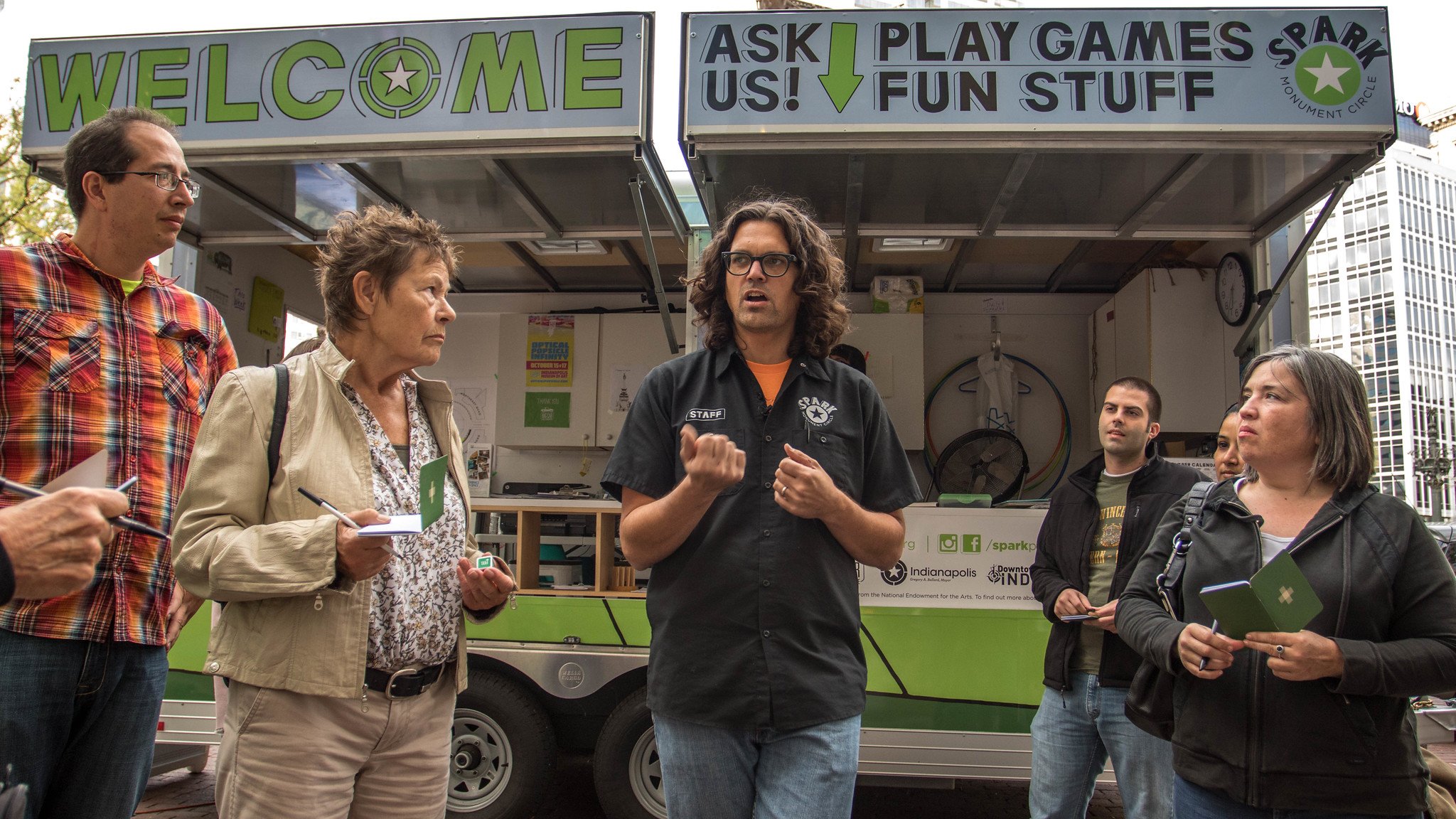
Jim Walker presents at SPARK on the Circle (2015).
Artists also choose their materials: paint, stone, metal, clay. Ours are tables and chairs, games like ping pong and foosball, big blue blocks for kids, the speakers at the Circle that play our carefully selected soundtrack, and our artist-made art trailers.
Even more important as tools in this kind of work are the activities we design that spark conversation, play, and creativity—like the artist engagements I mentioned above or simple things like coloring and sending a friend a historic postcard. Public spaces are OK when they have nice chairs and umbrellas and plants around. But these spaces—as we see at the Circle—truly come alive when staffed and activated by artists.
Above
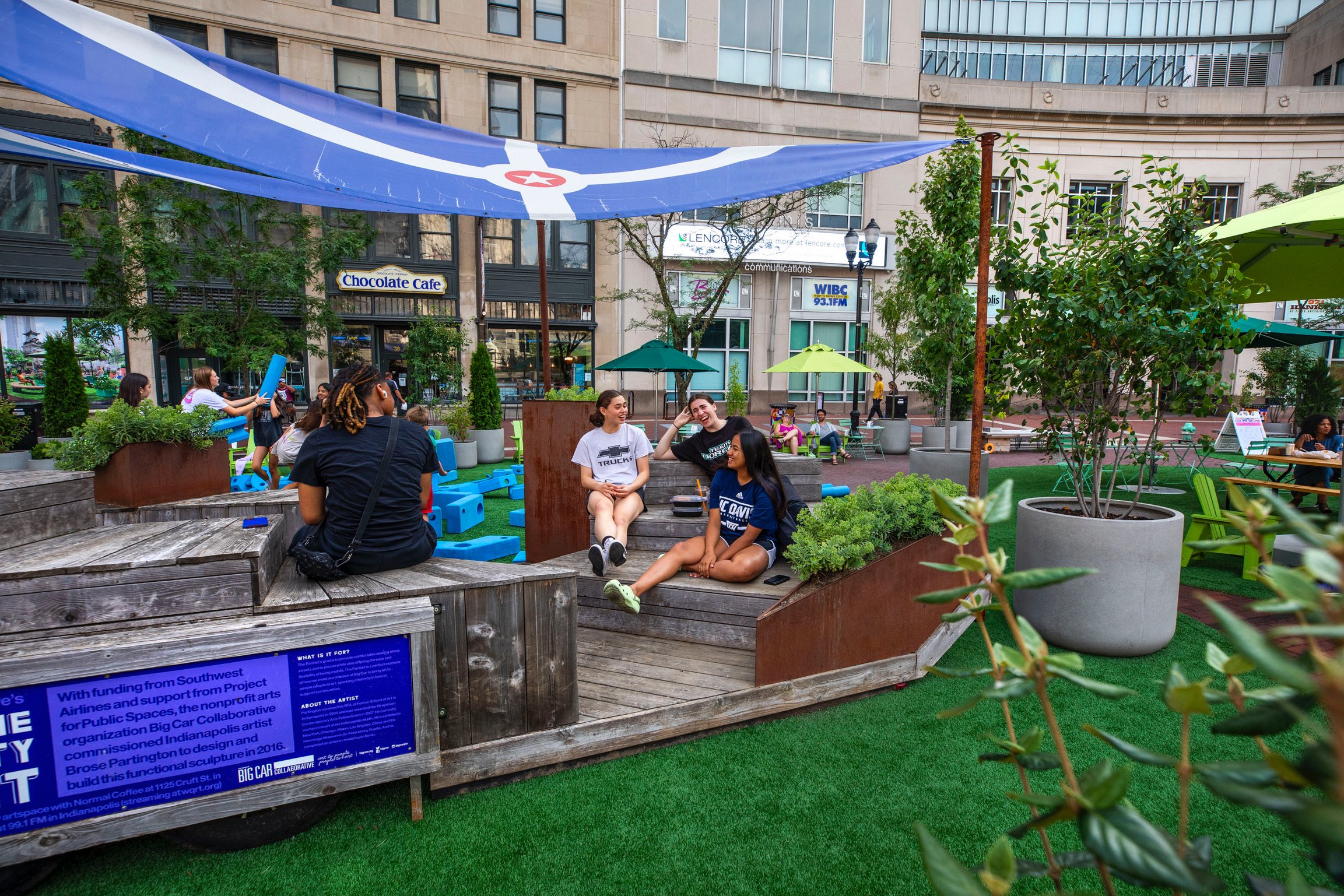
SPARK on the Circle, designed by Merritt Chase, features shade canopies and a variety of structured and loose seating.
Traditionally, artists then put their ideas into action. They make decisions as they paint, draw, sculpt, photograph, perform, or build. At the Circle, we make decisions as the work unfolds. We share much of that agency with the public who are encouraged to make choices, move things around, and do (mostly) what they want. We don’t know exactly what will happen. We’re collaborating with everybody who walks into the space. We’re making the work together.
Some of this work is physical. But our priority is on making human-scale experiences. These may be brief and temporary occurrences. But people feel the connections long term. We remember.
Above
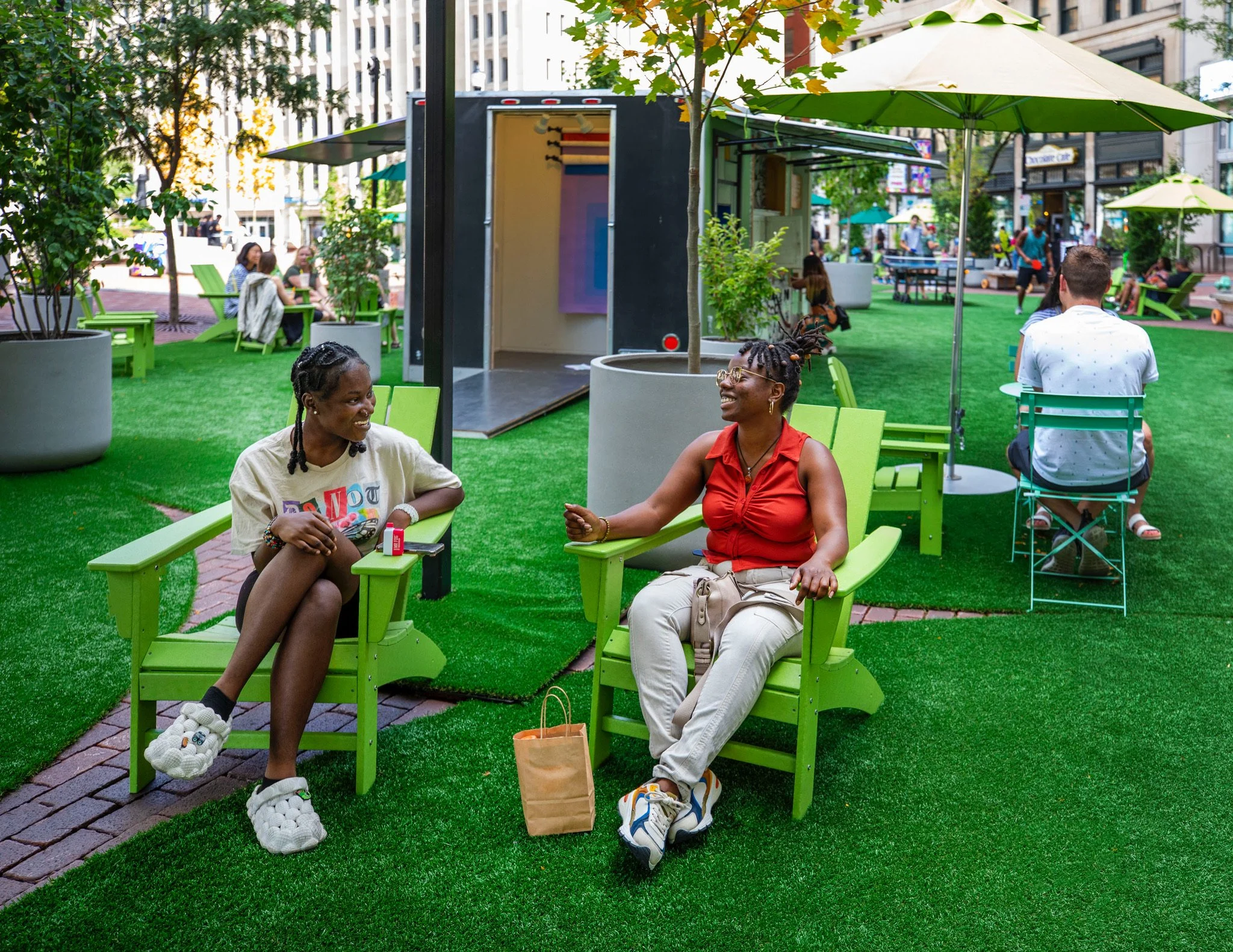
SPARK on the Circle (2025).
This leads next to the steps of refinement and maintenance. We try things, pay attention, learn, and make changes. Things need cleaned, repaired, replaced, reorganized, and reconsidered. Materials wear out. Plants grow. People use (or misuse) stuff in ways we can’t anticipate.
We see maintenance as an opportunity to pay attention and communicate our care and respect for everyone who spends time at the Circle. We know our attention to details can help people slow down, feel comfortable, and become more open to curiosity, conversation, and connection.
At the Circle, maintenance isn’t something that comes after the work is made. It’s a crucial aspect of the art itself. Care is attention practiced over time. Truly noticing in this way is a vital part of what makes this work art. As artists, we pay close attention to the place, to what people do there, and to possibilities that might otherwise go unnoticed.
And we invite and include others in paying attention as well—something that can be very difficult in our distracting days dominated by so many screens. Maybe attention happens at the Circle while playing chess with a stranger, writing a haiku, or pausing in the middle of the city to listen to birds chirp in temporary trees.
◆◆◆