In Search of the Family Lore
◆◆◆
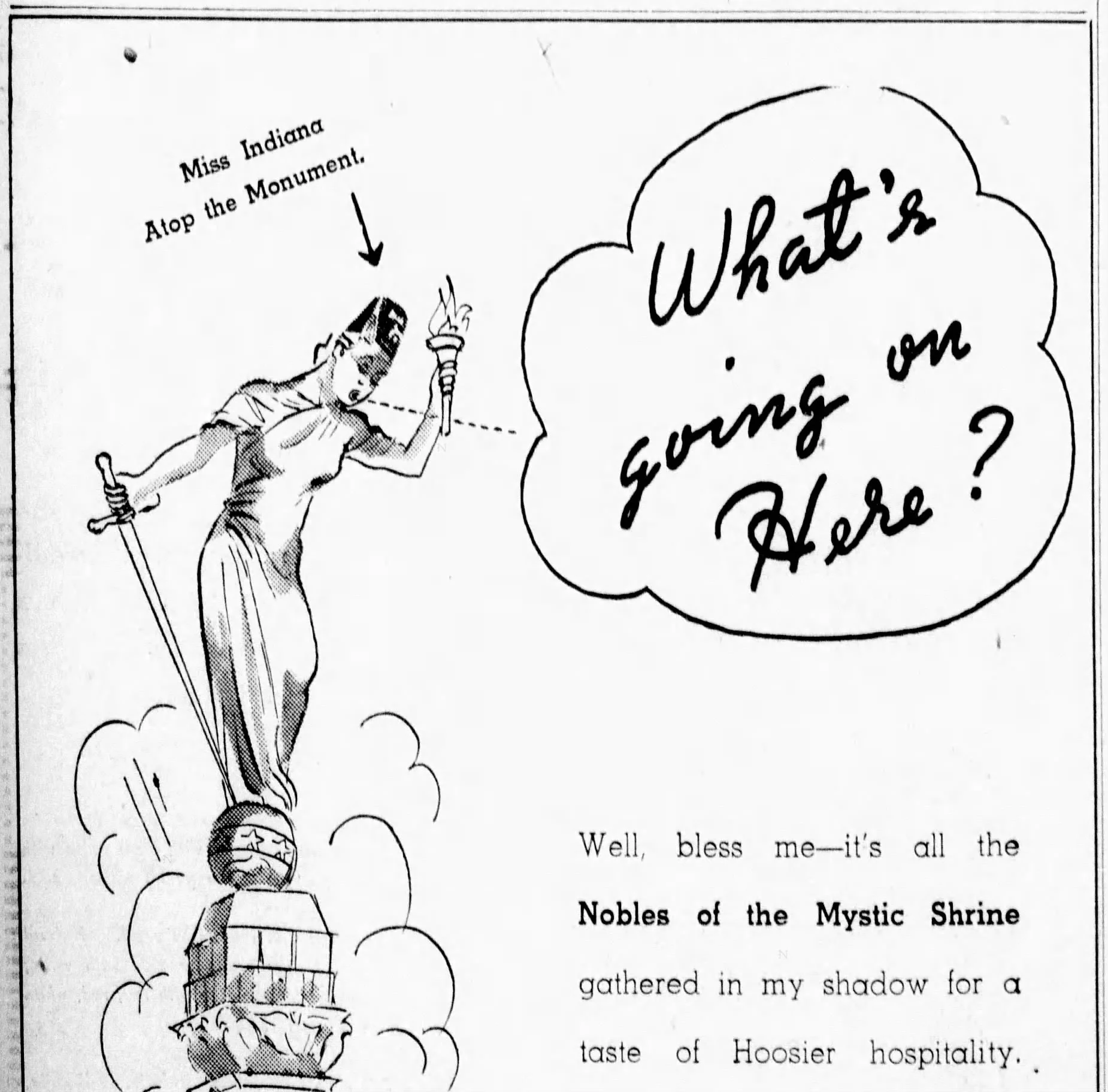
Above
Credit: Indianapolis Star, June 8, 1941
I’d like to think of myself as a prankster. Maybe not a prolific prankster, but I’ve been known for a good bit here and there. One of my earliest memories of family lore was about a prankster. My great-great-uncle Grover—my grandmother’s uncle—allegedly put soap into the monument’s fountains to make them bubble up for a few hours. Apparently, Grover was somewhat of a ringleader when it came to group antics.
As the City-County Archivist for Indianapolis, digging through old records for other peoples’ family stories is my job. I didn’t expect my own family to be the harder search. When I pressed my father for more details about Grover, his brother Wilbur, and their antics, he had no concrete details to provide about their pranks. It was just known that those brothers were always up to something, as boys and as adults. The date of the soap prank is murky as well; my grandmother thinks it happened before she was born in the late 1920s, but my father contends it happened around World War II as an act of celebration. So naturally I turned to the archives, but there wasn’t much on Grover. He was a laborer in the Richmond, Indiana, area, building bridges and hauling cinders and gravel. He served in World War I, stationed in Panama.
Though I couldn’t find any proof of this family lore, I stumbled upon a common trend of individuals putting soap in the fountains to mark a celebration, holiday, or event. So much so that a 1961 Indianapolis News article mentioned that the monument commission kept “a supply of chemicals on hand to neutralize detergents tossed in the fountains.” Below is an image from a 1961 Indianapolis Star article describing “the quietest prank pulled by the 40 and 8 during its three-day convention here was this billow of bubbles...” The 40 and 8 was a veteran's organization.
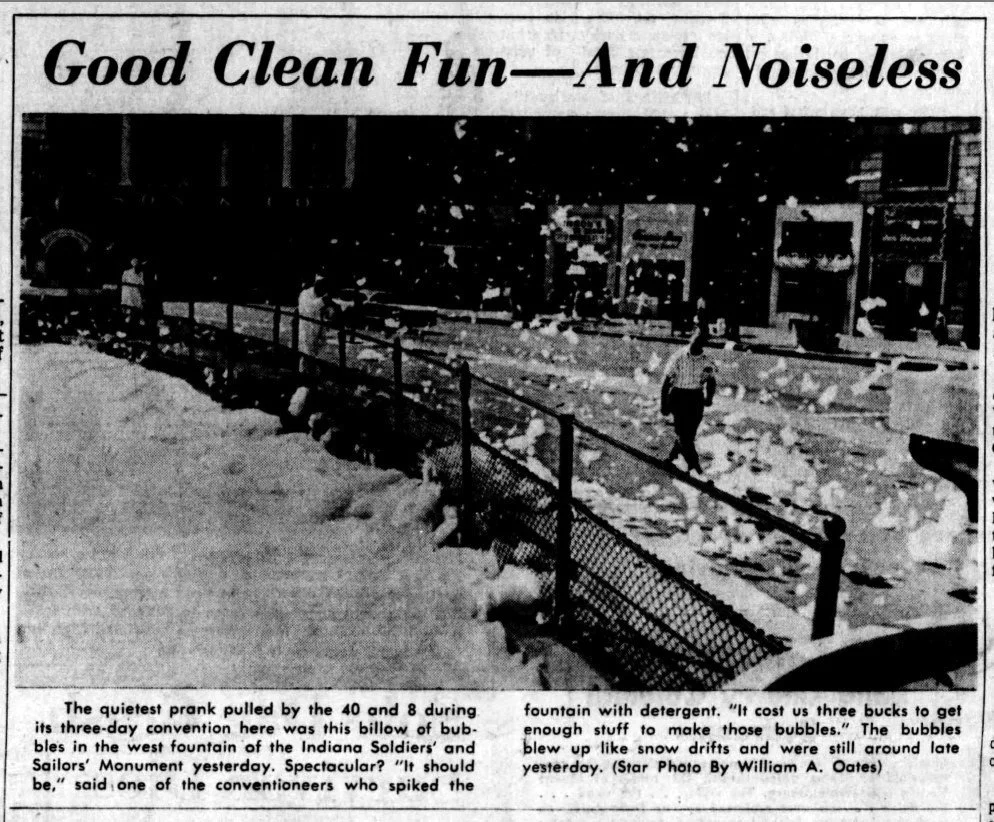
Above
Credit: Indianapolis Star, September 24, 1961
Spiking the fountains continued throughout the decades. Just a few years later, a 1963 Indianapolis Star article described another prank: “During the night some rapscallions who doubtless thought they were having a big time tossed a couple boxes of detergent into the pool. Result: billows of foam.” In a “Did You Notice?” piece in the 1976 Indianapolis News, they reported on new “soap bubbles in the fountains on Monument Circle,” attributing the prank to “pre-Halloween unfunny ‘tricking.’”
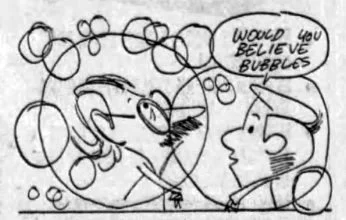
Above
Credit: Indianapolis News, October 21, 1976
This essay is certainly not an endorsement to take your soap downtown today. I am not trying to encourage vandalism of the space. But rather, this conversation begs the question: What happens when the monument space is disrupted or subverted rather than revered?
There’s something fascinating about the way people interact with civic spaces. They are a place to gather, they honor history, they reflect a city’s identity. Even moments of disruption can reveal how intertwined civic spaces are with public life. There is an intentionality in the meaning of a monumental space, but there is also a range of ways people experience these designed places. These civic spaces are not just backdrops, but also active participants in community life, continually shaped and reshaped by identities, memories, and emotions of the individuals who move through them. Then, is the dialogue of a monument both its original intended message and also the countless ways the public chooses to engage with it? Expressive, collaborative, respectful, and yes, even a little mischievous.
I can only answer these questions above for myself, but when I walk past the monument, in awe of that limestone and bronze, I think about my family, smile, and giggle to myself, “Oh, Grover.”
◆◆◆